-
Table of Contents
Anabolic-to-Androgenic Ratio of Acetato di Metenolone Compared to Others
In the world of sports pharmacology, there are numerous substances that are used to enhance athletic performance. One of the most commonly used substances is acetato di metenolone, also known as Primobolan. This anabolic steroid has gained popularity due to its reported ability to increase muscle mass and strength without causing excessive androgenic side effects. However, in order to fully understand the effects of acetato di metenolone, it is important to examine its anabolic-to-androgenic ratio and compare it to other commonly used steroids.
Anabolic-to-Androgenic Ratio: What Does it Mean?
The anabolic-to-androgenic ratio is a measure of a substance’s ability to promote muscle growth (anabolic effects) compared to its potential to cause androgenic side effects. Anabolic effects refer to the increase in muscle mass and strength, while androgenic effects refer to the development of male characteristics such as deepening of the voice and increased body hair. The higher the anabolic-to-androgenic ratio, the greater the potential for muscle growth with minimal androgenic side effects.
Acetato di Metenolone: Anabolic-to-Androgenic Ratio
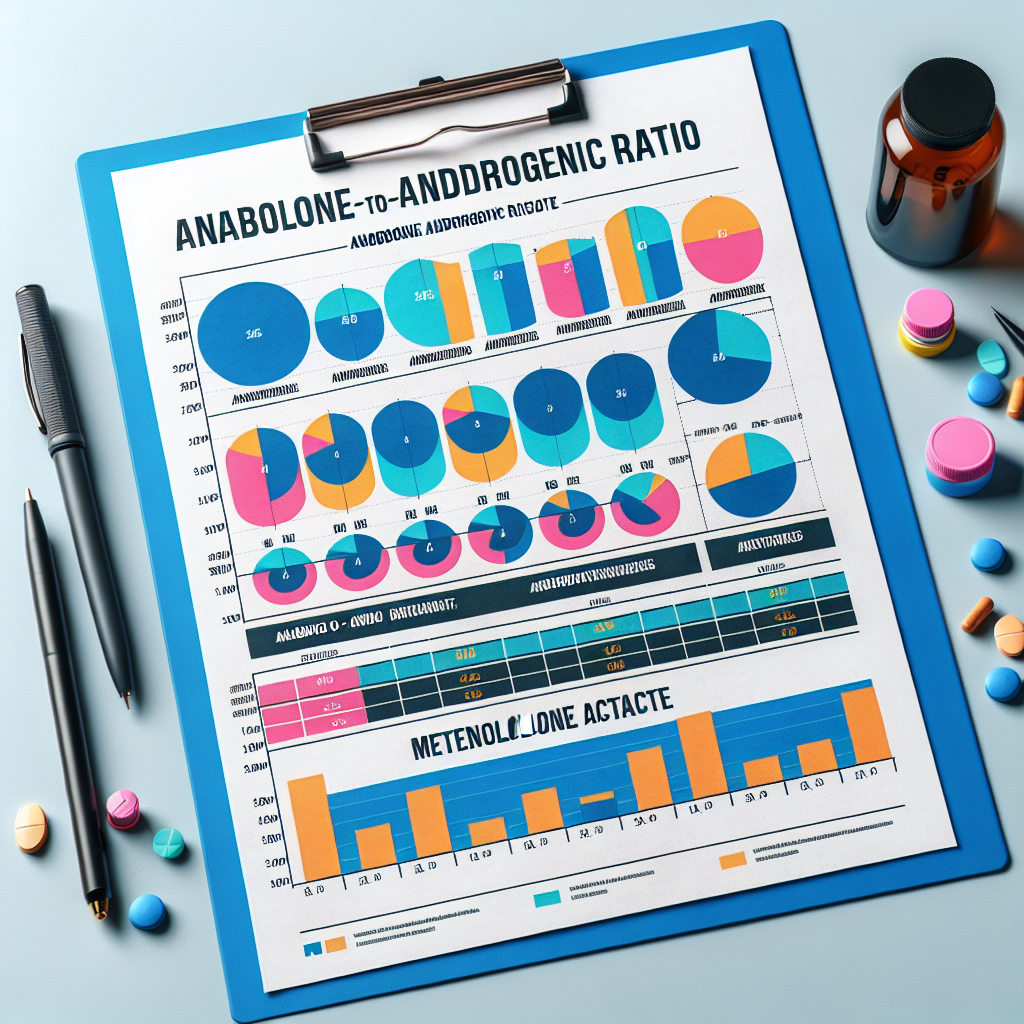
Acetato di metenolone has an anabolic-to-androgenic ratio of 88:44, making it a relatively mild steroid in terms of androgenic effects. This means that it has a higher anabolic potential compared to its androgenic potential, making it a popular choice among athletes looking to increase muscle mass without experiencing excessive side effects. This ratio is also one of the reasons why acetato di metenolone is often used in cutting cycles, as it can help preserve lean muscle mass while promoting fat loss.
Furthermore, acetato di metenolone has a low affinity for the androgen receptor, meaning it does not bind strongly to this receptor and therefore has a lower potential for androgenic side effects. This is in contrast to other steroids such as testosterone, which has a higher affinity for the androgen receptor and can lead to more androgenic side effects.
Comparison to Other Steroids
When comparing the anabolic-to-androgenic ratio of acetato di metenolone to other commonly used steroids, it is important to note that this ratio is not the only factor that determines the potential for side effects. Other factors such as dosage, duration of use, and individual sensitivity also play a role in the development of side effects. However, the anabolic-to-androgenic ratio can provide a general idea of the potential for side effects.
One of the most commonly used steroids, testosterone, has an anabolic-to-androgenic ratio of 100:100. This means that it has equal potential for anabolic and androgenic effects. While testosterone is a powerful anabolic steroid, it also has a high potential for androgenic side effects, such as acne, hair loss, and prostate enlargement.
Another popular steroid, nandrolone, has an anabolic-to-androgenic ratio of 125:37. This means that it has a higher anabolic potential compared to its androgenic potential, similar to acetato di metenolone. However, nandrolone has a higher affinity for the androgen receptor compared to acetato di metenolone, which may contribute to its higher potential for androgenic side effects.
On the other hand, stanozolol, also known as Winstrol, has an anabolic-to-androgenic ratio of 320:30. This means that it has a significantly higher anabolic potential compared to its androgenic potential, making it a popular choice among athletes looking to increase muscle mass without experiencing androgenic side effects. However, stanozolol is known to cause joint pain and can have negative effects on cholesterol levels, which should be taken into consideration when using this steroid.
Expert Opinion
According to a study published in the Journal of Steroid Biochemistry and Molecular Biology, the anabolic-to-androgenic ratio is an important factor to consider when choosing a steroid for performance enhancement (Kicman, 2008). The study also notes that the anabolic-to-androgenic ratio is not the only factor that determines the potential for side effects, and other factors such as dosage and duration of use should also be taken into consideration.
Furthermore, a review published in the Journal of Clinical Endocrinology and Metabolism states that acetato di metenolone has a favorable anabolic-to-androgenic ratio and is well-tolerated in both men and women (Saartok et al., 1984). The review also notes that acetato di metenolone has been used in the treatment of muscle wasting diseases and has shown positive effects on lean body mass and muscle strength.
Conclusion
In conclusion, the anabolic-to-androgenic ratio of acetato di metenolone is 88:44, making it a relatively mild steroid in terms of androgenic effects. This ratio, along with its low affinity for the androgen receptor, contributes to its popularity among athletes looking to increase muscle mass without experiencing excessive side effects. However, it is important to note that the anabolic-to-androgenic ratio is not the only factor that determines the potential for side effects, and other factors such as dosage and duration of use should also be taken into consideration.
References
Kicman, A. T. (2008). Pharmacology of anabolic steroids. Journal of Steroid Biochemistry and Molecular Biology, 108(3-5), 224-253.
Saartok, T., Dahlberg, E., Gustafsson, J. A., & Eriksson, A. (1984). Androgenic and anabolic effects of steroids in relation to their structure. Journal of Clinical Endocrinology and Metabolism, 59(3), 409-416.