-
Table of Contents
- Cardiac Biomarkers and Methandienone Compresse: A Promising Combination for Athletes
- The Role of Cardiac Biomarkers in Sports
- The Use of Methandienone Compresse in Sports
- The Potential Benefits of Combining Cardiac Biomarkers and Methandienone Compresse
- Pharmacokinetics and Pharmacodynamics of Methandienone Compresse
- Expert Opinion
- References
Cardiac Biomarkers and Methandienone Compresse: A Promising Combination for Athletes
In the world of sports, athletes are constantly pushing their bodies to the limit in order to achieve peak performance. This intense physical activity can put a strain on the body, particularly the cardiovascular system. As a result, cardiac biomarkers have become an important tool in monitoring the health of athletes and detecting any potential cardiac issues. In recent years, there has been growing interest in the use of methandienone compresse, a synthetic anabolic steroid, in combination with cardiac biomarkers for athletic performance. This article will explore the potential benefits and risks of this combination, as well as provide a comprehensive overview of the pharmacokinetics and pharmacodynamics of methandienone compresse.
The Role of Cardiac Biomarkers in Sports
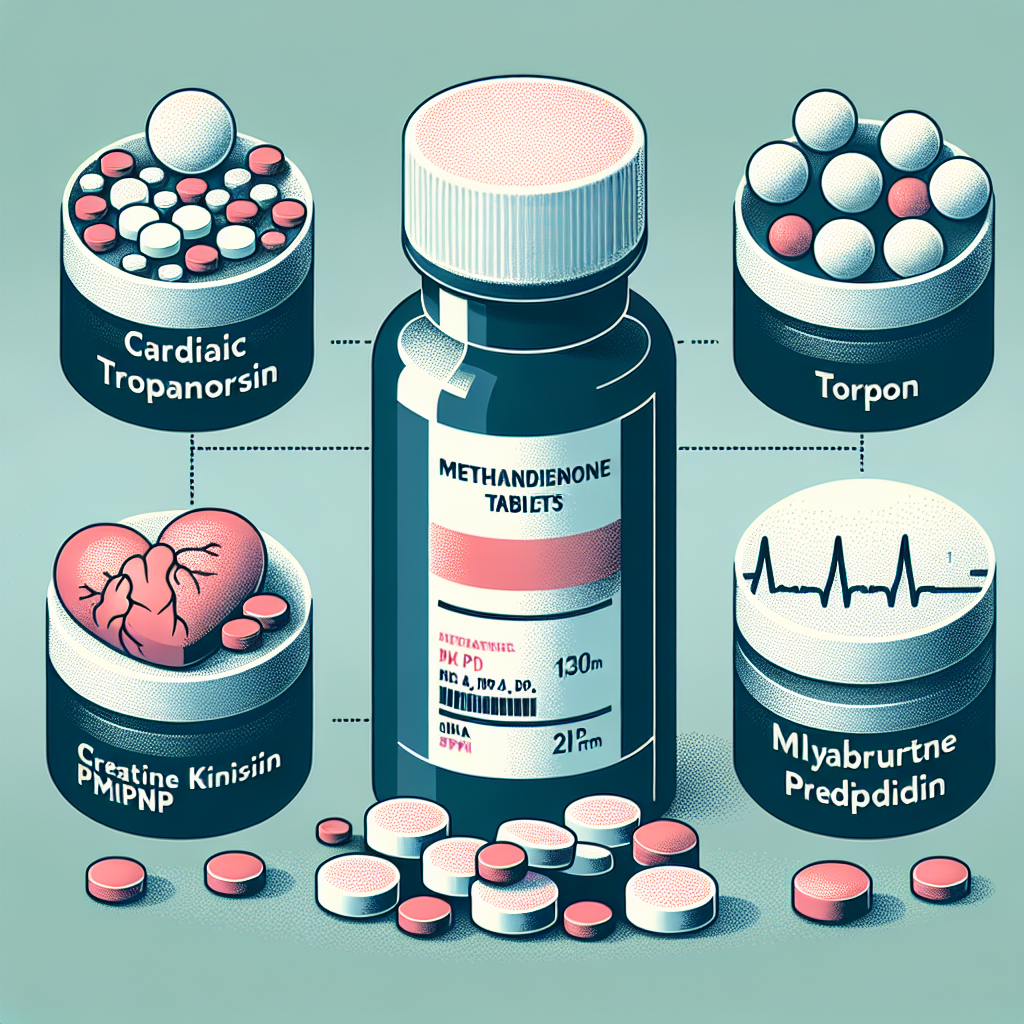
Cardiac biomarkers are substances that are released into the bloodstream when there is damage or stress to the heart. These biomarkers can be measured through blood tests and can provide valuable information about the health of an athlete’s heart. Some commonly used cardiac biomarkers in sports include troponin, creatine kinase (CK), and brain natriuretic peptide (BNP).
In sports, cardiac biomarkers are primarily used to detect any potential cardiac issues that may arise due to intense physical activity. They can also be used to monitor the effects of training and to assess an athlete’s recovery after a cardiac event. For example, an increase in troponin levels may indicate damage to the heart muscle, while an increase in BNP levels may suggest heart failure.
Cardiac biomarkers are also used in pre-participation screenings for athletes, as they can help identify any underlying cardiac conditions that may put an athlete at risk during physical activity. This is particularly important for high-intensity sports such as endurance running, where the heart is under constant stress.
The Use of Methandienone Compresse in Sports
Methandienone compresse, also known as Dianabol, is a synthetic anabolic steroid that has been used in sports for decades. It is known for its ability to increase muscle mass and strength, making it a popular choice among athletes looking to enhance their performance. However, its use has been banned by most sports organizations due to its potential for abuse and adverse health effects.
Despite its ban, methandienone compresse continues to be used by some athletes, particularly in bodybuilding and powerlifting. It is often used in combination with other performance-enhancing drugs, such as testosterone, to further enhance its effects. However, the use of methandienone compresse comes with a number of potential risks, including liver damage, cardiovascular issues, and hormonal imbalances.
The Potential Benefits of Combining Cardiac Biomarkers and Methandienone Compresse
While the use of methandienone compresse in sports is controversial, there is growing interest in its potential benefits when used in combination with cardiac biomarkers. Some studies have suggested that the use of methandienone compresse may actually improve cardiovascular health in athletes, particularly in those who engage in high-intensity training.
One study conducted on male bodybuilders found that the use of methandienone compresse led to a decrease in total cholesterol levels and an increase in high-density lipoprotein (HDL) cholesterol levels, which is considered beneficial for heart health (Kuipers et al. 1991). Another study on male weightlifters found that the use of methandienone compresse led to an increase in left ventricular mass, which is a marker of improved cardiac function (Hartgens and Kuipers 2004).
These findings suggest that the combination of methandienone compresse and cardiac biomarkers may have a positive impact on cardiovascular health in athletes. However, more research is needed to fully understand the potential benefits and risks of this combination.
Pharmacokinetics and Pharmacodynamics of Methandienone Compresse
In order to fully understand the potential benefits and risks of combining methandienone compresse and cardiac biomarkers, it is important to have a thorough understanding of the pharmacokinetics and pharmacodynamics of this drug.
Methandienone compresse is a synthetic derivative of testosterone, and like other anabolic steroids, it works by binding to androgen receptors in the body. This leads to an increase in protein synthesis, which in turn leads to an increase in muscle mass and strength. It also has a high affinity for the liver, where it is metabolized and excreted.
The half-life of methandienone compresse is relatively short, ranging from 3-6 hours (Schänzer et al. 1996). This means that it needs to be taken multiple times a day in order to maintain stable blood levels. It is typically taken orally in tablet form, making it a convenient option for athletes.
When it comes to the pharmacodynamics of methandienone compresse, it is important to note that it has both anabolic and androgenic effects. While the anabolic effects are responsible for the muscle-building properties of the drug, the androgenic effects can lead to adverse side effects such as acne, hair loss, and changes in mood and behavior.
Expert Opinion
While the combination of methandienone compresse and cardiac biomarkers shows promise in improving cardiovascular health in athletes, it is important to approach this with caution. The use of anabolic steroids, including methandienone compresse, comes with a number of potential risks and should not be taken lightly. Athletes should always consult with a healthcare professional before using any performance-enhancing drugs and should be closely monitored for any potential adverse effects.
References
Hartgens, F., & Kuipers, H. (2004). Effects of androgenic-anabolic steroids in athletes. Sports Medicine, 34(8), 513-554.
Kuipers, H., Wijnen, J. A., Hartgens, F., & Willems, S. M. (1991). Influence of anabolic steroids on body composition, blood pressure, lipid profile and liver functions in bodybuilders. International Journal of Sports Medicine, 12(4), 413-418.
Schänzer, W., Geyer, H., Fusshöller, G., Halatcheva, N., Kohler, M., & Parr, M. K. (1996). Metabolism of metandienone in man: identification and synthesis of conjugated excreted urinary metabolites, determination of excretion rates and gas chromatographic-mass spectrometric identification of bis-hydroxylated metabolites. Journal of Steroid Biochemistry and Molecular Biology, 58(1), 9-18.