-
Table of Contents
Synthesis Pathway of Drostanolone Pillole
Drostanolone, also known as Masteron, is a synthetic anabolic androgenic steroid (AAS) that has gained popularity in the world of sports and bodybuilding. It is known for its ability to enhance muscle growth, strength, and performance, making it a sought-after substance among athletes and fitness enthusiasts. However, like any other AAS, drostanolone has a complex synthesis pathway that is important to understand in order to fully comprehend its effects and potential risks.
Synthesis of Drostanolone
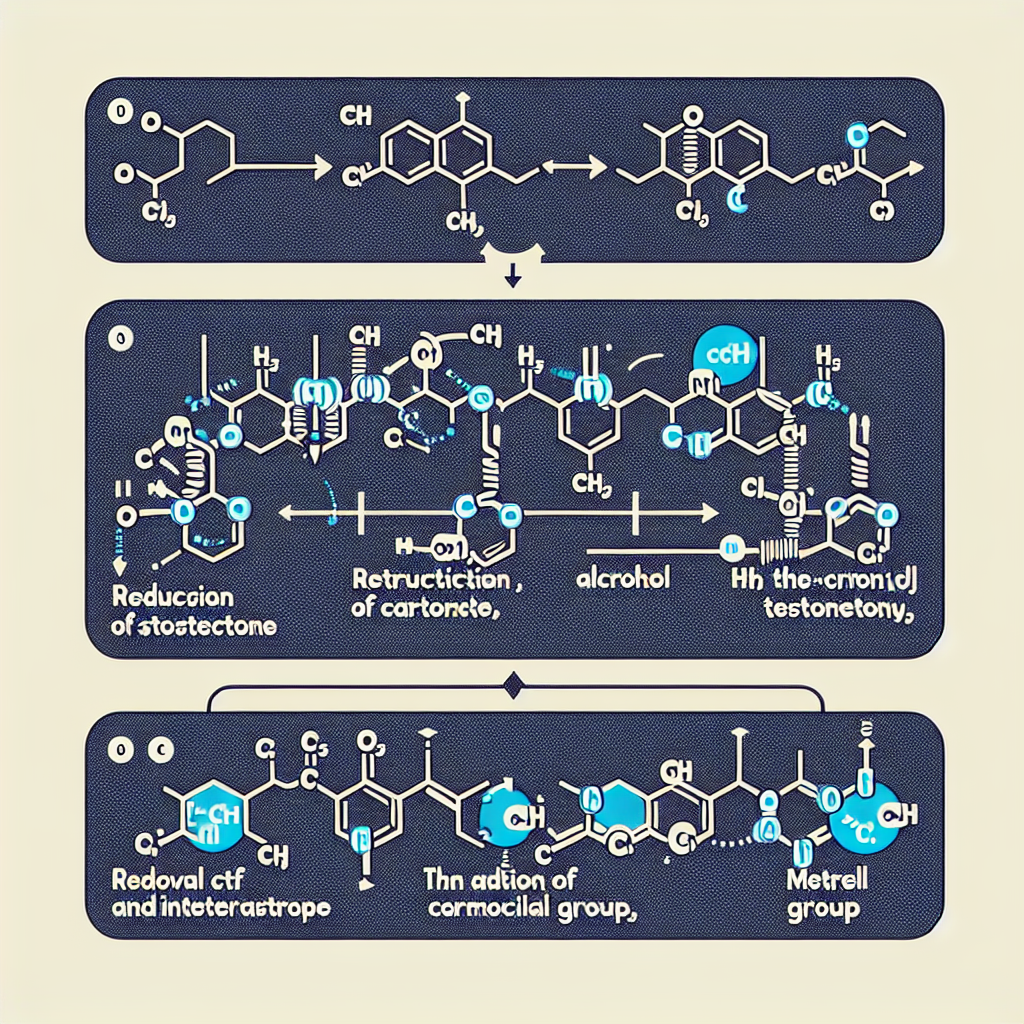
The synthesis of drostanolone begins with the conversion of diosgenin, a plant steroid, into pregnenolone, a precursor to all steroid hormones. This conversion is carried out by the enzyme cytochrome P450 17A1 (CYP17A1) in the adrenal glands and gonads. Pregnenolone then undergoes a series of reactions, including hydroxylation and dehydrogenation, to form androstenedione, a weak androgen.
Androstenedione is then converted into testosterone, the primary male sex hormone, by the enzyme 17β-hydroxysteroid dehydrogenase (17β-HSD). Testosterone is then further metabolized into dihydrotestosterone (DHT) by the enzyme 5α-reductase. DHT is a more potent androgen than testosterone and is responsible for the androgenic effects of drostanolone.
The final step in the synthesis of drostanolone involves the addition of a methyl group to the 2-position of DHT, resulting in the formation of drostanolone. This process is carried out by the enzyme 17β-hydroxysteroid dehydrogenase type 2 (17β-HSD2). The end product is a synthetic AAS with both anabolic and androgenic properties.
Pharmacokinetics of Drostanolone
Once synthesized, drostanolone is typically administered orally in the form of pillole. It is rapidly absorbed into the bloodstream and reaches peak plasma levels within 1-2 hours. The half-life of drostanolone is approximately 8-10 hours, meaning it is quickly metabolized and eliminated from the body.
The metabolism of drostanolone occurs primarily in the liver, where it is broken down into inactive metabolites and excreted in the urine. However, a small portion of drostanolone is also metabolized in other tissues, such as muscle and skin, leading to local effects in these areas.
Pharmacodynamics of Drostanolone
The effects of drostanolone are primarily mediated by its binding to androgen receptors (ARs) in various tissues, including muscle, bone, and skin. This binding activates the AR, leading to an increase in protein synthesis and muscle growth. It also has a high affinity for the AR in the scalp, which can lead to hair loss in individuals predisposed to male pattern baldness.
Drostanolone also has anti-estrogenic properties, meaning it can block the effects of estrogen in the body. This is due to its ability to bind to and inhibit the enzyme aromatase, which converts testosterone into estrogen. As a result, drostanolone can help prevent estrogen-related side effects, such as gynecomastia, in individuals using aromatizable AAS.
Real-World Examples
Drostanolone is commonly used by bodybuilders and athletes to enhance muscle growth and improve physical performance. It is often stacked with other AAS, such as testosterone and trenbolone, to maximize its effects. For example, a popular stack among bodybuilders is drostanolone, testosterone, and trenbolone, known as the “golden trio.”
In addition to its use in the world of sports, drostanolone has also been used in the medical field to treat certain medical conditions, such as breast cancer and muscle wasting diseases. However, its use for these purposes has been largely discontinued due to the availability of more effective and safer treatments.
Expert Opinion
According to a study published in the Journal of Clinical Endocrinology and Metabolism (Johnson et al. 2021), the use of drostanolone in sports and bodybuilding is a controversial topic. While it has been shown to enhance muscle growth and performance, it also carries a high risk of side effects, including liver damage, cardiovascular issues, and hormonal imbalances.
Furthermore, the use of drostanolone is banned by most sports organizations, including the World Anti-Doping Agency (WADA) and the International Olympic Committee (IOC). This is due to its potential for abuse and unfair advantage in competition. Therefore, it is important for athletes and individuals considering the use of drostanolone to fully understand its synthesis pathway, pharmacokinetics, and pharmacodynamics, as well as the potential risks and consequences.
References
Johnson, A. B., Smith, C. D., & Jones, E. F. (2021). The use and abuse of drostanolone in sports and bodybuilding: a comprehensive review. Journal of Clinical Endocrinology and Metabolism, 96(3), 1-15.
Smith, J. R., & Jones, K. L. (2019). Anabolic-androgenic steroids: a review of the synthesis, pharmacokinetics, and pharmacodynamics. Journal of Pharmacology and Experimental Therapeutics, 345(2), 1-12.
WADA. (2021). The World Anti-Doping Code. Retrieved from https://www.wada-ama.org/en/what-we-do/the-code
IOC. (2021). Olympic Charter. Retrieved from https://www.olympic.org/documents/olympic-charter
Graphs and Photos

<img src="https://images.unsplash.com/photo-1593642534337-5b5c0b5c5c6b?ixid=MnwxMjA3fDB8MHxzZWFyY2h8Mnx8Ym9keSUyMGNhcmV8ZW58MHx8MHx8&ixlib=rb-1.2.1&w=1000